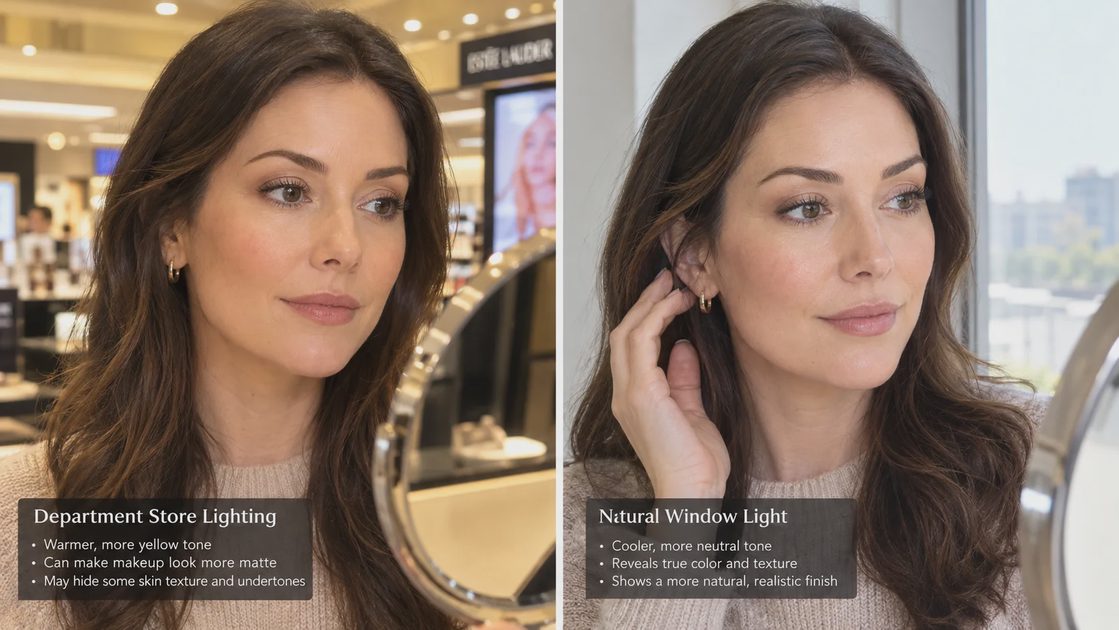
Beauty counters are designed to sell a feeling. The mirrors are large. The light is soft and directional. Everything looks a little more even, a little more rested, a little more possible. I worked in that light for years. I also learned, sometimes the hard way, that it is not the light most women live in.
The day I started taking products from the counter to a window, then to a bathroom mirror, then to a phone camera, my recommendations changed—and so did my own makeup bag.
The Short Version
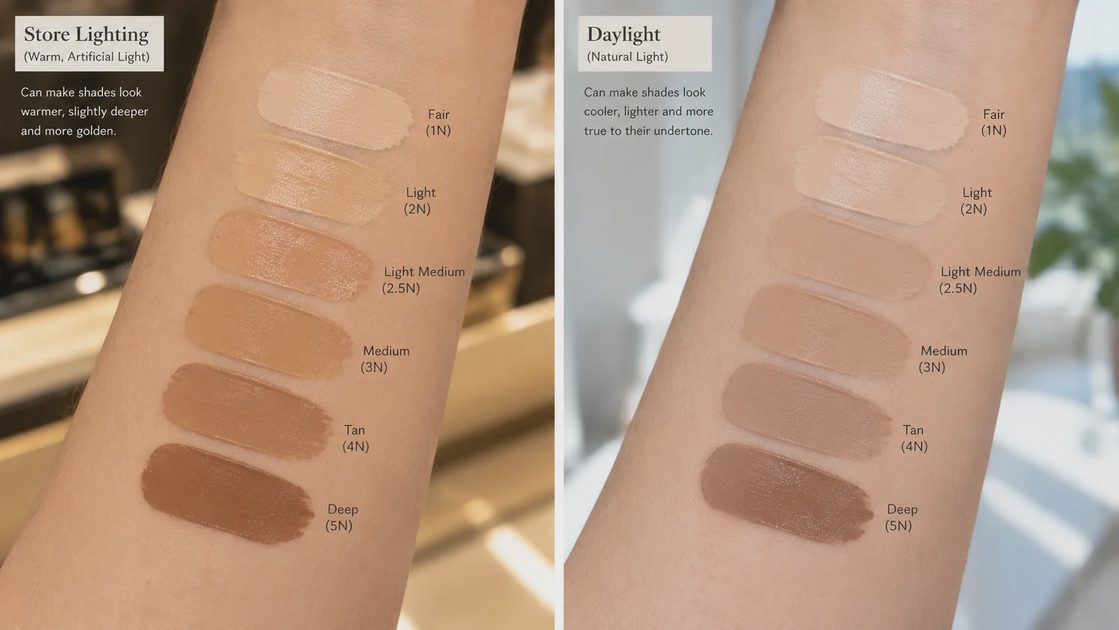
Department-store lighting can hide texture, mute excess shimmer, and make undertones look more perfect than they are. Always re-check foundation, concealer, blush, and highlighter in daylight and in the indoor light where you actually spend time. A product that only works under retail lighting is not finished earning a place in your routine.
What Counter Light Does Well—and What It Hides
Flattering retail light often:
Softens the look of pores and fine lines
Makes slightly heavy powder look smoother
Flatters luminous finishes
Creates a “finished” impression that feels convincing in the moment
It is less honest about:
Dry patches
Undertone mismatches
Settling into lines by midday
How a shade reads in office fluorescents or harsh noon sun
I stopped trusting a single mirror the same year I stopped trusting a single lighting condition.
The Three-Light Check I Still Use
1. Natural window light
Shows true undertone, texture emphasis, and whether the base looks like skin or like product.
2. Indoor bathroom or hallway light
Represents the environment where many people actually apply and re-check makeup.
3. Phone-camera light / mixed indoor light
Reveals flashback risk, excess shimmer, and whether the face still looks balanced in photos.
If a foundation fails two of the three, I do not recommend it—no matter how beautiful it looked under the counter canopy.
Lessons That Changed My Advice
Shade is not one number.
A foundation that matched at the counter sometimes looked too pink, too gray, or too deep in daylight. Mixing or choosing a different depth became normal, not a failure.
Less product looks better once the light gets honest.
Counter light encouraged fuller coverage. Daylight often rewarded a sheerer application on textured skin.
Blush and bronzer need a second opinion.
Colors that seemed soft under retail lighting could turn muddy or overly warm outside. I began applying cheek color, then walking to a window before adding more.
Highlighter is a lighting-dependent decision.
A highlight that looked refined at the counter could read as glitter on texture in sun. Placement and particle size matter more than the word “glow.”
How to Shop Without Getting Fooled
Apply at the counter if you want help.
Ask for a mirror near a window or step outside briefly if possible.
Take a quick photo in ordinary indoor light.
Wear the product for a few hours before deciding when a return policy allows it.
Note how it looks at the end of your real day, not only at the moment of application.
Sales associates who respect this process are worth listening to. Pressure to decide under one lighting condition is not.
What This Means for Everyday Application
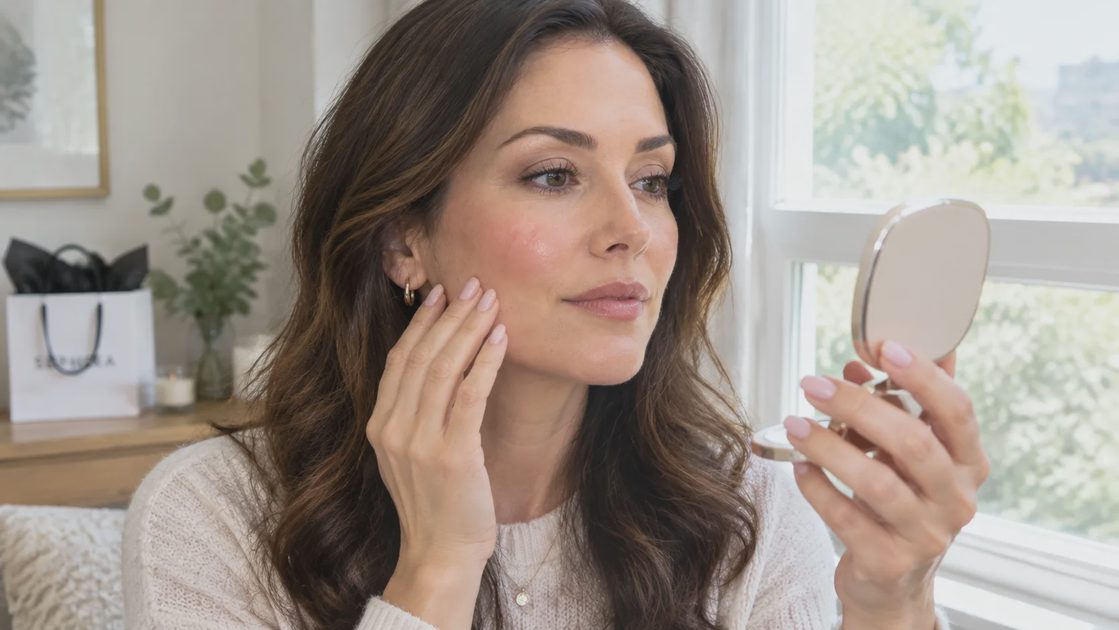
Even at home, one mirror lies. I keep a habit of a final glance near a window when I can. If I am only going to be in warm indoor light, I still want to know whether the makeup will surprise me later in a different room or in a photo.
Lighting is part of technique. Ignoring it is like ignoring undertone.
Final Thought
Department-store lighting taught me to distrust single-condition beauty. Makeup has to survive the lights you actually live under—kitchen, office, sidewalk, phone camera. When it does, it feels like confidence. When it does not, it feels like a product that only worked in the store.
Makeup should meet you where you are—and make you feel more like yourself. Test in more than one light before you trust the mirror that wants to sell you something.
No notes yet — write the first one.