
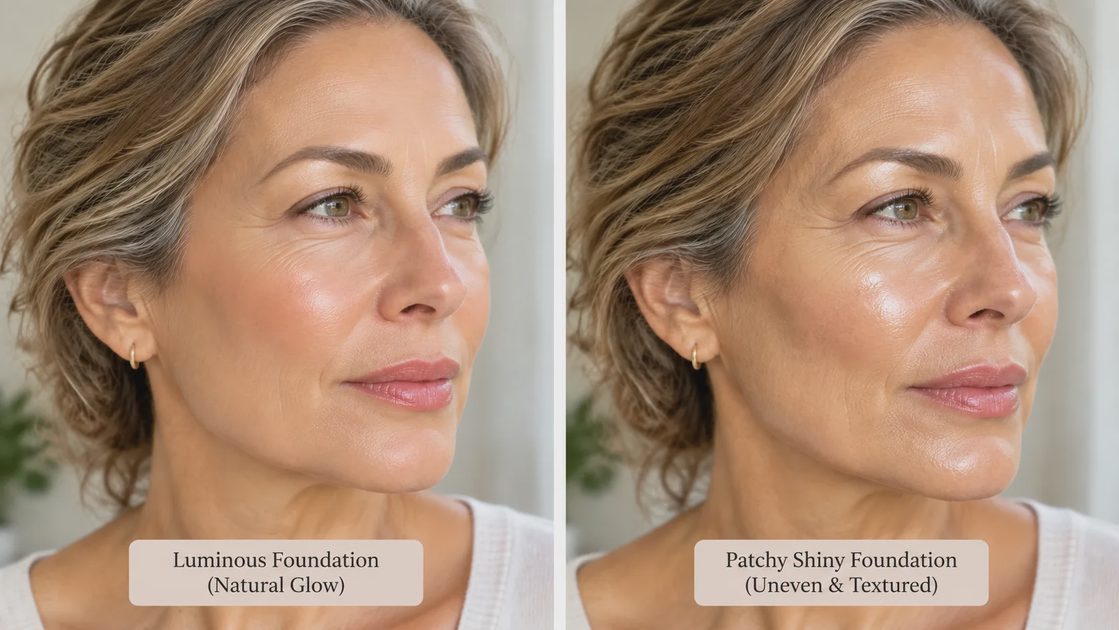
“Glowy” has become one of the most overused words in foundation marketing. On a young, firm face under soft lights, it usually means a healthy-looking radiance. On mature, drier, or textured skin, the same word can mean something else entirely: oil-slick shine, emphasized pores, or a finish that turns patchy by afternoon.
I do not dislike glow. I dislike glow that has not been tested in honest conditions. This is what luminous foundations have actually looked like on my skin—and how I decide whether a radiant claim is usable.
Disclosure: Observations are from my dry-to-combination mature skin. Lighting, prep, and undertone will change your results.
The Short Version
Glow works on mature skin when the formula is flexible, the skin is well moisturized, and the luminosity comes from a skin-like sheen rather than large reflective particles. Glow fails when it sits on dry patches, amplifies texture, or turns greasy in the T-zone while the cheeks still look dehydrated.
What Brands Mean by “Glowy” vs. What You See
Marketing glow often includes:
Light-reflecting particles
Emollient bases that create sheen
Soft-focus claims
Campaign lighting that forgives everything
Real-world glow on mature skin has to survive:
Natural daylight
Indoor mixed lighting
Movement and oil changes across the day
Visible texture that campaign images blur
If a foundation only looks radiant in a filtered video, it is not yet a yes.
When Glow Looks Beautiful After 45
In my tests, luminous foundations succeeded when:
Skin was properly moisturized first — glow on top of dryness looks like product, not health
Coverage stayed light to medium — heavy luminous layers can look mask-like
Particles were fine — large sparkle reads as texture magnifier
Application was sheer in textured zones — especially cheeks and under-eyes
I avoided over-powdering the areas meant to stay alive
The best “glowy” finishes looked like good skin, not like highlighter mixed into foundation.
When Glow Backfires
Common failure modes on mature skin:
Emphasized dry patches — sheen clings to flakes
Pore emphasis — light reflects in ways that outline texture
Midday separation — glow remains where you are oily and disappears where you are dry
Camera flash issues — some luminous formulas bounce light in unflattering ways
Too much product — radiance stacked on radiance becomes shine
A finish can be both expensive and unflattering. Price does not correct physics.
How I Test a Luminous Foundation Now
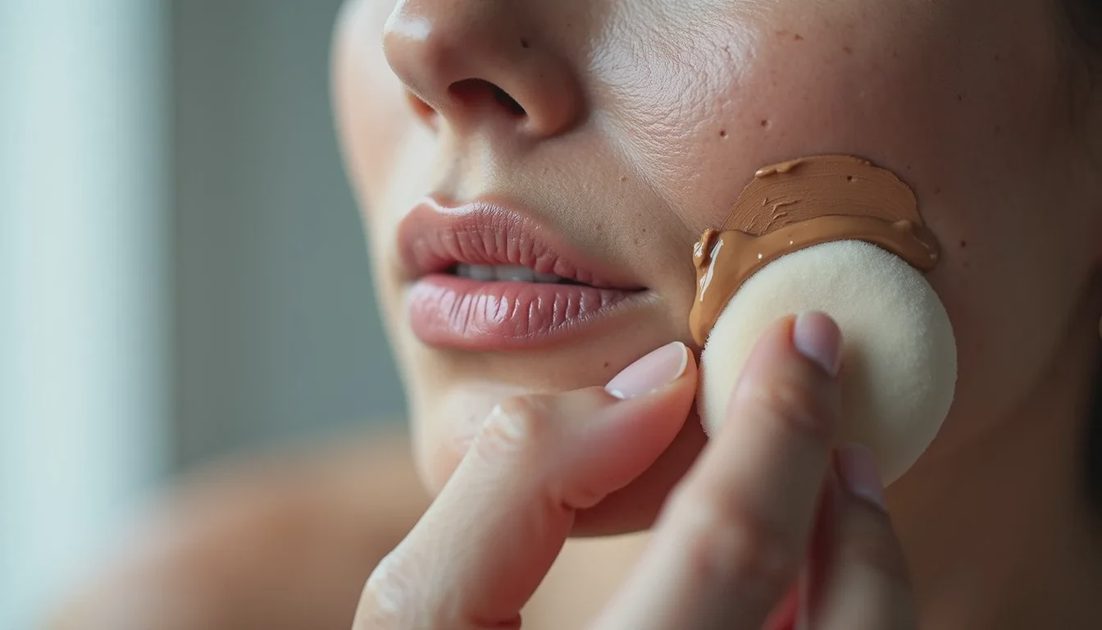
Apply over my normal moisturizer
Use a thin layer, then build only where needed
Check at the window immediately
Check again after two to four hours
Take one phone photo in indoor light
Decide only after the afternoon read
If I need constant blotting in some areas and constant re-hydration in others, the formula is not balanced for my face.
Application Tips That Improve Glow on Mature Skin
Mix a drop of facial oil or moisturizer into a matte foundation only if you already know your skin accepts it
Keep luminous product off the deepest texture if it magnifies it
Set the T-zone lightly and leave the high points of the face freer
Choose cream blush over dry powder when you want the skin to stay cohesive
Prefer “skin-like” and “satin-luminous” language over “glass skin” promises
Glow should look accidental, even when it is deliberate.
Glow Alternatives If Foundation Keeps Failing
Sometimes the better radiant face is:
A great skin tint plus targeted concealer
A satin foundation with cream blush and a tiny bit of sheen only on the high points
Better skincare hydration and less base product overall
You do not owe your face a luminous foundation category if the category keeps fighting you.
Final Thought
On mature skin, “glowy” is not a universal good. It is a specific finish that either supports the face or exposes every dry patch and texture pattern. Test it in daylight, wear it through the afternoon, and keep it only when it still looks like skin.
Makeup should meet you where you are—and make you feel more like yourself. Choose radiance that survives honest light.
No notes yet — write the first one.