Blush is one of the fastest ways to make a face look awake—or unintentionally older. On mature skin, placement, formula, and intensity matter as much as color. Too low, and the face can look heavier. Too harsh, and the flush reads artificial. Too shimmery, and texture becomes the headline.
This guide focuses on a natural, lifted finish that still looks like you in ordinary light.
The Short Version
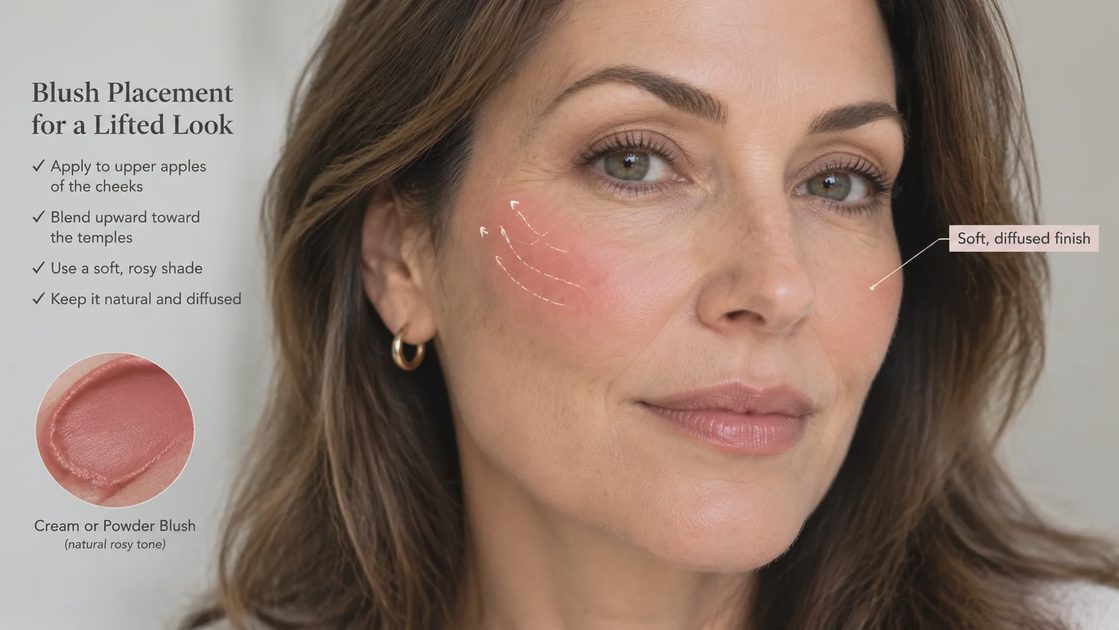
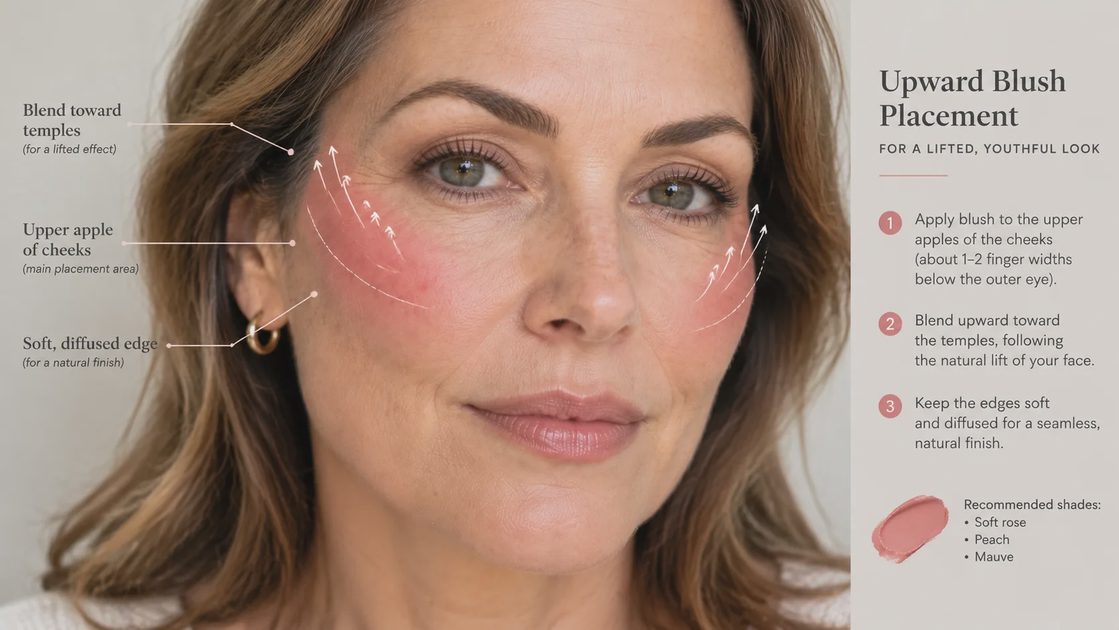
Place blush on the upper apples and blend slightly upward toward the temples, not downward toward the mouth. Prefer cream or finely milled powder formulas. Build slowly. Check in daylight. Soft edges beat precise stripes.
Why Placement Changes With Age
Facial proportions and skin behavior shift over time. What once sat perfectly on the center of the apple can begin to emphasize sag or create a drawn look if it drops too low. A slightly higher, softer placement often restores a healthier read without requiring contour gymnastics.
This is not about chasing youth. It is about placing color where it supports the features you have now.
Cream vs. Powder on Mature Skin
Cream or liquid blush
Often blends into drier skin more kindly and looks like a flush rather than a layer. Apply after base, before heavy powder. Blend with fingers, sponge, or a soft synthetic brush.
Powder blush
Works well when skin is well moisturized and the formula is finely milled. Use a light hand. Avoid chalky textures that sit on top of dryness.
Many women do well with cream for everyday and powder for touch-ups or longer wear preference. Neither is mandatory.
A Step-by-Step Placement Method
Smile once to find the apple, then relax your face.
Apply color on the upper portion of that area—not under the center of the eye, and not down toward the nasolabial fold.
Blend upward and outward in short motions.
Soften any hard edge into the hairline direction, not down.
Step back from the mirror and check symmetry in daylight if possible.
If the color disappears, add a little more. If it stripes, you used too much too fast.
Color Guidance Without Strict Rules
Mid-tone roses, soft peaches, and muted berries flatter many complexions
Very pale pinks can look ashy on some deeper or warmer skin tones
Extremely bright cool pinks can emphasize unevenness if overapplied
Undertone match matters more than trend names
If you are unsure, test a sheer layer and live with it for an hour before committing.
Mistakes That Age the Face Faster Than No Blush
Placing color too low toward the mouth
Using a muddy brown-pink that reads as shadow rather than flush
Applying shimmer blush over textured areas in harsh light
Skipping blend and leaving a circular stamp
Matching blush to lipstick in a heavy, matching-set way that looks dated on your particular style
Blush should look like circulation, not like a costume piece—unless costume is your intentional goal.
A Two-Minute Everyday Version
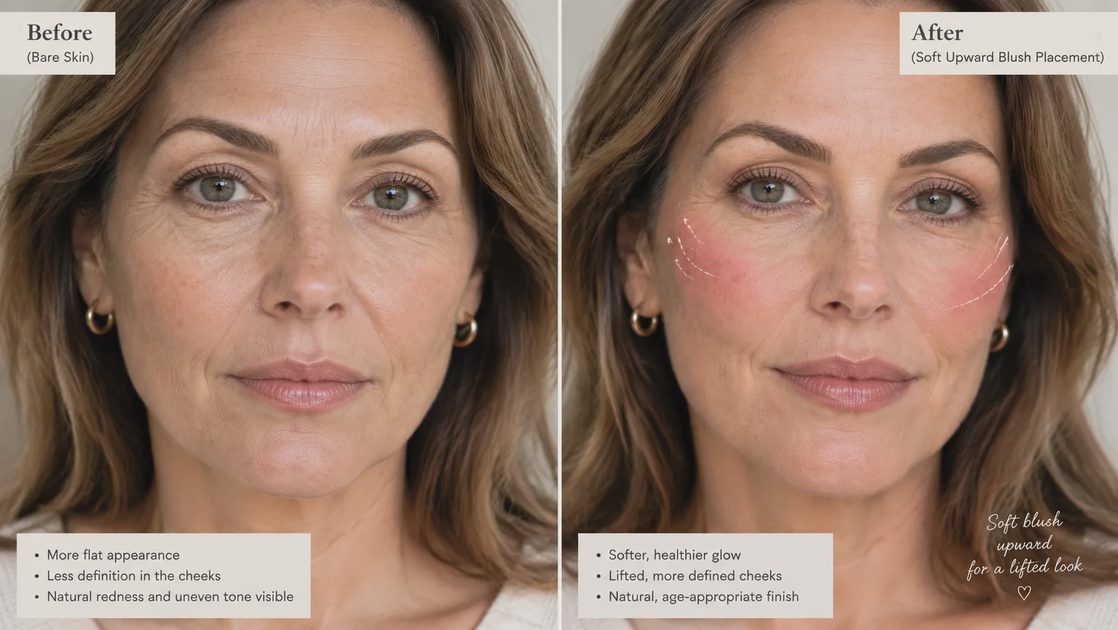
One tap of cream blush on each upper apple
Blend upward with fingers
Quick check near a window
Done. No contour required for an ordinary day.
Final Thought
Blush on mature skin works best when it is soft, slightly lifted, and honestly blended. You are not painting a younger face. You are adding life to the face you have—in the light you actually live in.
Makeup should meet you where you are—and make you feel more like yourself. Place color where it wakes the face up, not where an old habit told you it belonged.
No notes yet — write the first one.